On this page
Japan: statutory identification marks, not environmental endorsements
Under the Act on the Promotion of Effective Utilization of Resources, specified plastic containers and packaging carry the プラ mark and specified paper containers and packaging carry the 紙 mark. Designated PET bottles and beverage steel and aluminium cans have their own statutory identifiers. The marks identify the legally defined packaging category. They are not recyclability claims, not recycling-fee receipts, and not substitutes for JIS material abbreviations. Foreign resin codes do not replace them.
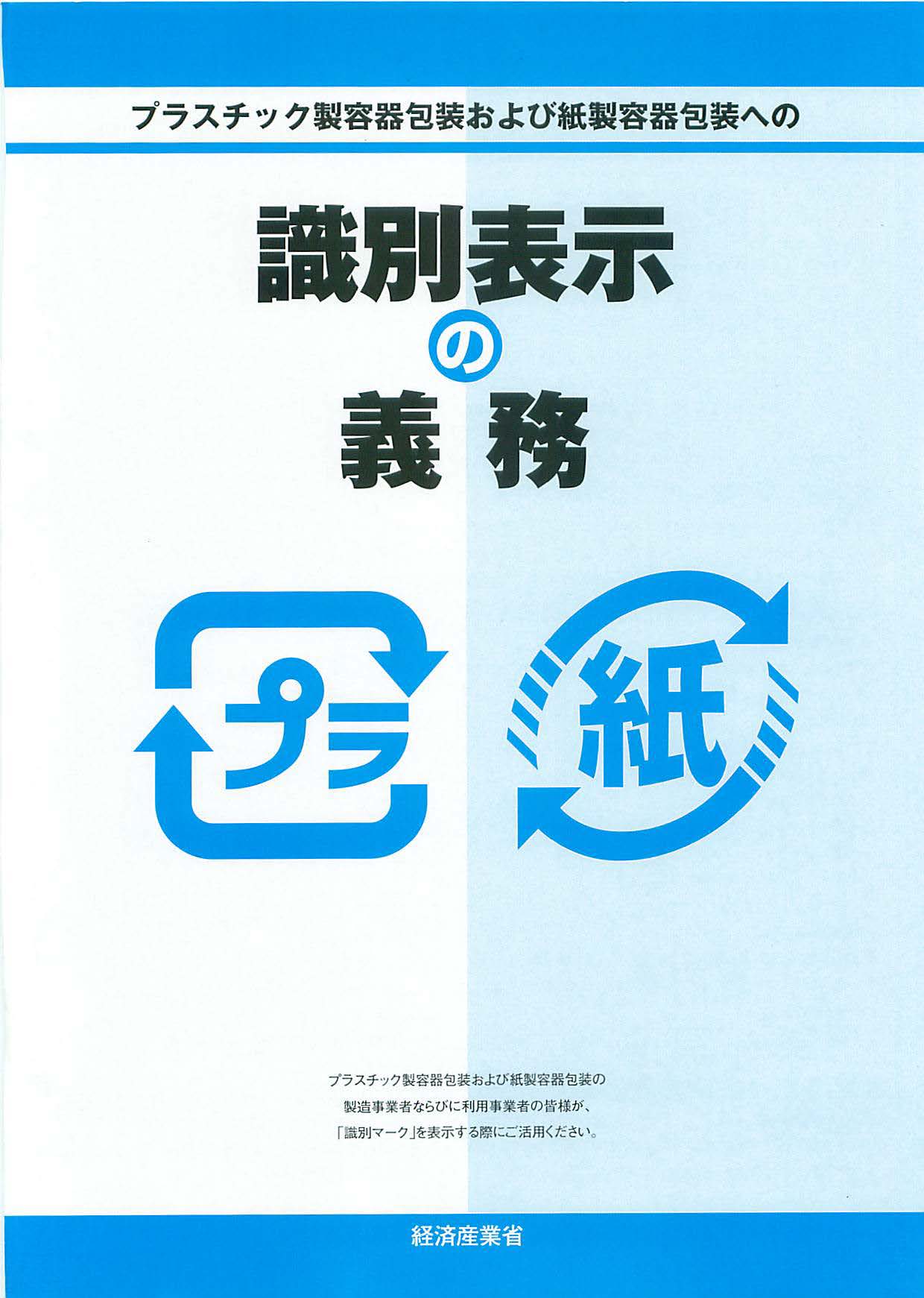
Marks are shown for identification, research and commentary. The statutory 様式 is the drawing that controls; a hybrid with SPI chasing arrows is not that drawing.
The question this report answers
Article 2 of the Act on the Promotion of Effective Utilization of Resources defines designated labelled products as products for which a mark facilitating separate collection is especially necessary. Articles 51–52 (current e-Gov numbering; older METI manuals cite former Articles 24–25) require ministerial ordinances setting the matters to be displayed and the method of display. Cabinet Order Table 5 lists the packaging items: plastic packaging other than designated PET bottles; paper packaging other than aluminium-free beverage cartons and corrugated board; PET bottles for beverages, alcohol and specified seasonings; steel cans for beverages and alcohol; aluminium cans for beverages and alcohol. PVC construction materials and small secondary batteries are also designated labelled products. They are not packaging marks and should not be counted into a “nine-group packaging” list.
Plastic and paper requirements took effect on 1 April 2001, with a two-year grace period to 31 March 2003. Specified seasonings moved into the PET class on 1 April 2008 (grace to 31 March 2009). A 1 April 2020 ordinance amendment allowed steel and aluminium marks to use the same size class as プラ and 紙 regardless of can diameter. The marks identify the legally defined category. They are not environmental endorsements. An SPI chasing-arrows triangle, or a PE or PP abbreviation, is not a substitute for プラ.
Legal status at a glance
| Requirement | Status | What it is |
|---|---|---|
| プラ / 紙 | mandatory | Specified plastic and paper containers and wrapping, from 1 April 2001. Print or label minimum height 6 mm; stamp or emboss 8 mm. |
| PET, steel, aluminium | mandatory | Designated beverage, alcohol and (for PET) specified-seasoning containers. Cans: beverages and alcohol under 7 litres. |
| Composites and separable parts | mandatory | Inseparable structures take the mark of the heaviest material. Readily separable components are each one unit. |
| PE, PP, PS and similar | voluntary | JIS K 6899-1 / ISO 1043-1. If used on a composite, show two or more constituents and underline the principal. Does not replace プラ. |
| Carton, corrugated, glass | voluntary or none | Aluminium-free beverage cartons and corrugated board have industry marks only. Glass bottles have no statutory packaging identification mark. |
What the marks are, and how they are applied
The 2001 display ordinance requires the mark on the surface, at one or more places, by printing, applying a label, or stamping or embossing, in the prescribed 様式. Colour is not prescribed; identity of the statutory drawing — line weight, slits, font — must be preserved. METI’s pamphlet treats each separable part as one packaging unit: cup plus lid plus film; bottle plus cap plus pump; inner bag plus outer box. The principle is to mark each part. The exception is that parts discarded at substantially the same time may be grouped on one part if the role-name of each part is written next to the mark. Where materials cannot be easily separated, the mass is treated as one pack and displays the mark of the heaviest material (paper 51 per cent / plastic 49 per cent → 紙). A PET egg carton is marked as plastic packaging, not with the statutory PET-bottle mark, because it is not a designated beverage or condiment bottle. Biodegradable plastic remains plastic for identification purposes.
Retail wrapping paper used at point of sale is exempt if 1,300 cm² or smaller; purpose-made product wrapping is not exempt even below that area. Unprintable packs carry no duty if no related separable component is printable; otherwise the mark and role-name go on that related component. Imports: the duty applies if the importer specified material, shape or trademark, or if the pack already bears Japanese print, label or stamp. Business-use packaging: the identification-mark duty applies to PET bottles and beverage steel and aluminium cans even when consumed in the course of business; it does not apply to paper and plastic packaging in that business-consumption case (JCPRA).
Who the obligation follows
Obligated persons include manufacturers of the relevant containers and businesses that commission manufacture for use in their business (brand owners and fillers), plus importers in specified cases. Small businesses are not exempt from the identification-mark duty, even where they are exempt from Containers and Packaging Recycling Act recycling-fee obligations. Those are different statutes with different exemptors. Specified labelled businesses above the production-volume thresholds who fail to display the mark face recommendation, publication, order and criminal penalty under Chapter 9 of the Act. The identification-mark file and the recycling-fee file are therefore not interchangeable compliance records.
Aluminium-free beverage cartons, corrugated board and glass bottles have no statutory packaging identification mark. Industry marks may appear on cartons and corrugated board. They are not a Japanese プラ or 紙 duty invented by analogy. The current e-Gov text of Articles 51–52, not a pre-renumbering pamphlet, is the statutory numbering that controls.
Primary sources and verification
Japan. Act on the Promotion of Effective Utilization of Resources (Act No. 48 of 1991). e-Gov
Japan. Ministerial ordinance on display of specified containers and packaging. e-Gov
METI. Identification-mark hub. METI
METI. Obligation pamphlet (PDF). Pamphlet
METI. Q&A. FAQ
JCPRA. Display explanation. JCPRA
METI. 2020 steel, aluminium and PET size change. METI
Japanese-language legislation and the current METI 様式 control. Last verified: 21 August 2026.