On this page
Recycled-content mandates: what is required, and does it reach the label?
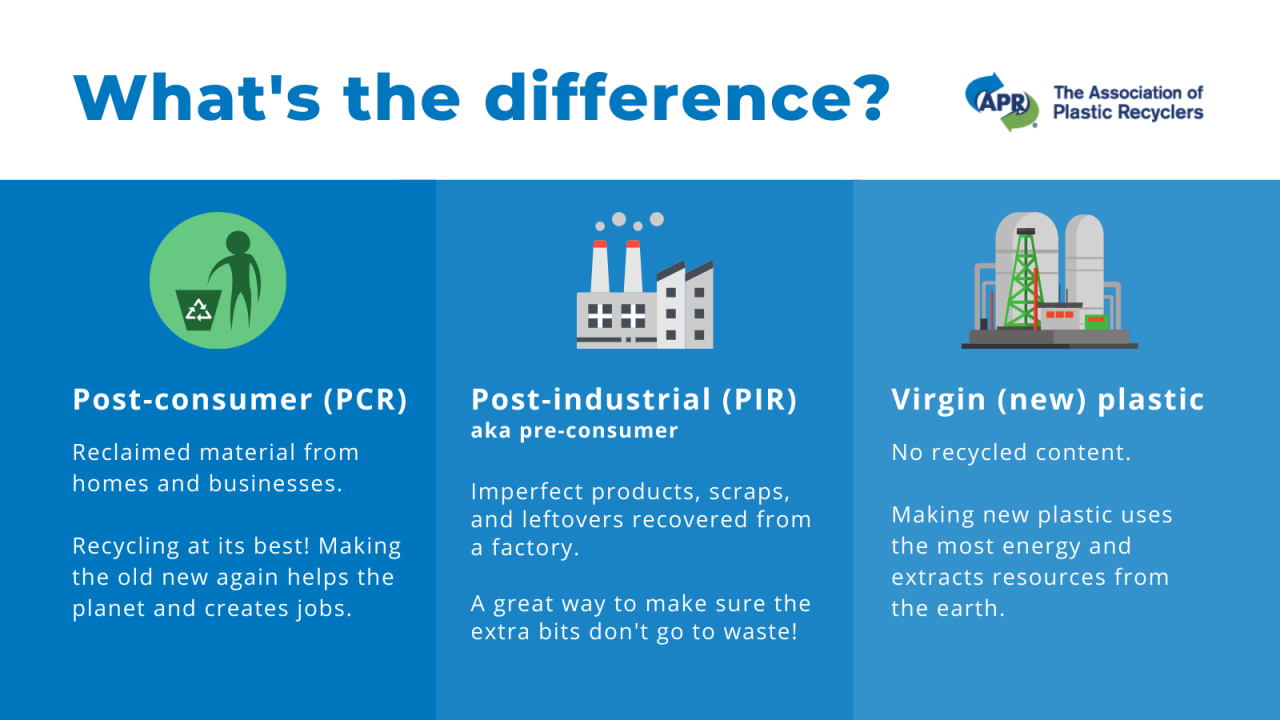
Marks and reference graphics are shown for identification, academic research and commentary. The image does not grant permission to apply a scheme mark to packaging; consult the issuing body's current eligibility and artwork rules.
From voluntary claim to statutory obligation
For most of its history, recycled content was a voluntary claim. Two legislative programmes have made it an obligation: California’s beverage-container minimums, in force since 2022, and the EU’s packaging-wide minimums arriving in 2030. A mandated percentage is compliance data rather than marketing. Its relationship to what appears on any individual package is indirect.
California: AB 793
California's Assembly Bill 793 (2020) created the first binding recycled-content trajectory for plastic beverage containers subject to the state's deposit system. The minimums are calendar-dated: 15 per cent post-consumer recycled content from 1 January 2022, 25 per cent from 1 January 2025, and 50 per cent from 1 January 2030 (APR, n.d.; Berlin Packaging, n.d.).
Four design features define the regime. First, the obligation is a portfolio annual average: compliance is measured across all of a producer's covered containers over the year rather than per bottle, with the consequence that a producer may sell zero-content containers indefinitely provided the fleet averages out (Berlin Packaging, n.d.). Second, only post-consumer material counts, excluding the pre-consumer streams whose inclusion inflates voluntary claims. Third, enforcement is monetised: administrative penalties accrue at $0.20 per pound of shortfall between required and achieved recycled content, with penalty liability beginning in 2023 and collection machinery operative from 2024 (Berlin Packaging, n.d.). The design converts under-compliance into a calculable cost, functioning as a virgin-plastic fee for producers below the minimum, rather than into a prohibition. Fourth, the trajectory is ratchet-locked: CalRecycle's director holds authority to reduce the minimums on findings of infeasibility but not to raise them (AB 793, 2020), an asymmetry that establishes the direction in which relief is available.
The European Union: PPWR Article 7
The EU regime, in Article 7 of the packaging regulation, is broader in scope and more intricate in structure. From 1 January 2030, plastic packaging placed on the EU market must contain minimum shares of recycled content recovered from post-consumer plastic waste, differentiated by category: 30 per cent for contact-sensitive packaging whose major component is PET; 10 per cent for contact-sensitive packaging of other plastics (excluding single-use beverage bottles); 30 per cent for single-use plastic beverage bottles; and 35 per cent for all other plastic packaging. The 2040 stage raises these to 50, 25, 65 and 65 per cent respectively (EUROPEN, 2025; Repak, 2025).
The design choices differ correspondingly. The thresholds apply per unit of packaging by category rather than as portfolio averages, to any plastic part exceeding 5 per cent of the packaging's weight, with exemptions for medical, pharmaceutical and infant-food contact formats and for compostable plastics (EUROPEN, 2025). Only post-consumer waste counts, aligning with California against pre-consumer inflation. Moreover, the operative machinery, comprising how recycled content is calculated, verified and documented, including the treatment of chemically recycled feedstock and the mass-balance attribution examined in the previous article, is delegated to implementing acts, so that the methodology is the principal locus of contention within the regime.
A sourcing caution belongs in the text rather than in a footnote: secondary summaries of Article 7 disagree on the 2030 figures, with at least one widely circulated table transposing the beverage-bottle and other-packaging percentages. The figures above follow the two industry-association summaries that agree (EUROPEN, 2025; Repak, 2025); commercial reliance requires verification against the Official Journal text, which could not be machine-extracted at article level for this collection.
The design divergences
Set side by side, the regimes diverge on three structural questions, and those divergences carry more practical consequence than the difference in percentages.
Averaging. California's portfolio average affords producers flexibility and secures system compliance at least cost, since recyclate flows to the containers in which incorporation is cheapest. The EU's per-category unit approach forecloses that optimisation, requiring recyclate in every format including the most difficult. The choice embeds different accounts of what mandates are for: total tonnage pulled through the system, in the Californian case, and universal design transformation, in the European.
Contact sensitivity. The EU differentiates food-contact formats, its lower minimums acknowledging the regulatory bottleneck on food-grade recyclate; California's regime, confined to beverage containers, sits entirely within that bottleneck and requires the food-grade material directly. Consequently the two regimes draw on the same scarce resource, food-grade rPET in particular, from different directions, and each has priced the resulting competition for feedstock implicitly.
Enforcement geometry. California's per-pound penalty renders shortfall a linear cost, whereas the EU's regime operates through market-access conformity, non-compliant packaging not being permitted on the market, so that shortfall is binary at the unit level. The Californian design tolerates and prices partial failure; the European design does not, which is why its exemptions and delegated methodology carry substantial weight.
The mandates and on-pack declaration
Neither regime requires an on-pack recycled-content declaration. California's compliance data flow runs from producer to regulator through reporting and is not visible at the shelf; a compliant bottle carries no mandated mark of its 25 per cent. The EU regulation likewise imposes no content label in Article 7, and its labeling architecture, the harmonised marks of Article 12, makes recycled-content labeling optional, on a harmonised format still to be specified, so that the mandate and the label travel on separate legal tracks (EUROPEN, 2025).
That outcome has a logic. Mandated minimums transform the meaning of a content label: where every bottle must average toward 25 per cent, "made with 25% recycled plastic" asserts compliance rather than distinction, and the marketing of baselines that regulators have set is what the "irrelevant benefit" doctrine in claims law increasingly polices. The EU's claims rules point in that direction explicitly, environmental claims concerning characteristics that a regulation already requires facing restriction under the packaging regulation's own claims provision and under the general unfair-practices regime (Directive (EU) 2024/825). The implication is that content mandates may suppress content labels, by converting the claim's subject matter from a point of distinction into a floor.
What survives on-pack is accordingly differentiation above the floor, as with "100% recycled" where 30 is required, together with scheme-certified claims whose machinery the mandates rely upon. Both regimes require auditable content accounting; the certification schemes examined in the earlier article supply it; and the mandates thereby complete a pattern recorded elsewhere in this theme, in which private claim infrastructure is used as public compliance evidence.
Feedstock demand under the two regimes
A further interaction between the regimes, which neither instrument mentions, is that both draw on the same physical supply, and the arithmetic of that draw accounts for much of the mandates' politics.
Post-consumer recyclate is not a single commodity but a quality ladder, and the mandates concentrate demand at its upper end. California's regime requires food-grade material by construction, beverage containers being food-contact, and the EU's category design does the same for its contact-sensitive tiers, with the beverage-bottle minimum layering on top of the separate single-use-plastics trajectory that European bottle markets already carry. Food-grade recyclate presupposes feedstock streams clean enough for food-contact reprocessing approval, which in practice privileges deposit-return collection, whose stream purity is documented in this theme's deposit article, over mixed kerbside recovery. The mandates therefore rank collection systems implicitly: jurisdictions with deposit infrastructure produce the feedstock the mandates consume, and producers' compliance costs vary with a supply geography that the mandates' texts do not acknowledge.
The concentration of demand also disciplines the two escalation paths differently. California's ratchet-with-relief design, under which the director is empowered to lower but not to raise the minimums (AB 793, 2020), operates as a feedstock-scarcity valve, translating supply shortfalls into schedule relief through infeasibility findings without legislative reopening. The EU's design internalises scarcity through category differentiation and exemptions instead, holding the dates fixed while calibrating exposure, and delegating to the pending methodology the question, examined in the mass balance article, whether chemically recycled and attributed volumes may relieve the food-grade bottleneck from the supply side.
The labeling consequence follows in either case. As mandated demand tightens the recyclate market, the verified content claim gains value, certification becoming the instrument through which scarce compliant material is allocated and evidenced, while the unverified claim carries increasing legal risk. The mandates, designed to change what packaging contains, thereby also alter which parties can credibly state its content.
Limits of the regimes
The regimes' omissions define them as sharply as their requirements. The mandates do not require labels, as set out above. They do not verify molecules: both regimes' treatment of attribution accounting remains unsettled, and their integrity depends on methodology decisions still in progress. They do not address recyclability: a container may meet its content minimum while remaining unrecyclable, and the converse also holds, the mandates governing one direction of circularity only. They do not harmonise with each other: a global producer faces portfolio averaging in one market and unit minimums in another, post-consumer definitions that align imperfectly, and documentation regimes built on different evidence. Nor do they, by themselves, create the recyclate they demand, being demand-side instruments whose feasibility depends on collection and reprocessing capacity legislated elsewhere, which is the systemic dependency on which every percentage rests.
In mandate jurisdictions, the informational value of a content claim is correspondingly altered. The absence of a recycled-content claim carries little information, since compliance may simply be unmarketed, whereas the presence of one increasingly indicates performance above a legal floor; and the floor itself, which determines the package's minimum content, appears nowhere on it.
Verification and evidence trails
Both regimes rest ultimately on evidence trails, and the architecture of those trails, in terms of who attests what to whom, completes the description of the mandates.
California's chain runs from producer to regulator: covered producers report their containers' resin data and post-consumer content to the state, whose penalty arithmetic operates on the reported shortfall, and the substantiation burden, comprising supplier documentation and reprocessor certification, rests on the reporting producer (Berlin Packaging, n.d.). The design's audit surface is the report: the state polices a portfolio-level number and examines its documentation on review, in the self-report-plus-audit structure whose integrity varies with an audit intensity that the statute does not fix.
The EU's chain will run through conformity assessment: recycled content joins the packaging regulation's product requirements, evidenced in technical documentation and declaration-of-conformity machinery that market-surveillance authorities police, with the calculation and verification methodology, including the treatment of process losses, the measurement point in the chain and the role of third-party verification, delegated to the pending implementing rules (EUROPEN, 2025). The unit-level obligation makes the evidence unit the packaging specification rather than the corporate portfolio, so that each SKU's file must carry its content case.
Between the two chains sits the certification industry examined earlier in this group, which supplies both with their operative evidence, audited chain-of-custody documentation being the instrument that traces post-consumer character through commercial supply chains at scale. The mandates' verification question accordingly resolves, in practice, into the schemes' known axes: which custody models regulators will accept, which is the mass-balance question pending on both continents, and how far scheme audit substitutes for regulatory inspection. Those answers will determine whether the mandates' percentages describe material reality or documentation reality, which is the gap that content regimes occupy and that the library's methodology pages are directed at keeping visible.
A comparison with the voluntary regime indicates what the mandates changed. Voluntary content claims are governed by a liability floor: the claim must be substantiatable when challenged, and silence remains available. Mandates replace that floor with a pair of constraints: content below the minimum is a violation whatever the label states, and the option of silence is removed, every covered producer being required to generate, document and report a number. That inversion is why the mandates bear on labeling even where no label is required. They convert recycled content from an optional assertion into a universal, auditable product attribute, creating the data infrastructure on which future labeling obligations can be imposed at low additional cost. A jurisdiction that has required producers to prove their percentages to a regulator is one implementing act away from requiring those percentages to be printed on the pack, and the direction of regulatory travel documented in this collection indicates that such an act is likely to follow.
References
AB 793 (2020) California Assembly Bill No. 793 (minimum recycled content, plastic beverage containers). Available at: Open source (Accessed: 18 August 2026).
APR (Association of Plastic Recyclers) (n.d.) California AB 793. Available at: Open source (Accessed: 18 August 2026).
Berlin Packaging (n.d.) California plastic beverage containers: recycled content requirements. Available at: Open source (Accessed: 18 August 2026).
Directive (EU) 2024/825 of the European Parliament and of the Council of 28 February 2024, OJ L, 2024/825, 6.3.2024. Available at: Open source (Accessed: 18 August 2026).
EUROPEN (2025) PPWR: all obligations [guidebook]. Available at: Open source (Accessed: 18 August 2026).
Repak (2025) Summary of the EU Packaging and Packaging Waste Regulation, February. Available at: Open source (Accessed: 18 August 2026).
Note on sources and verification
California's percentages, dates, portfolio-average structure, $0.20-per-pound penalty and the director's reduce-only authority are drawn from the bill text and the two industry summaries cited, which agree. The EU's Article 7 percentages follow EUROPEN and Repak, which agree with each other; at least one other circulated summary transposes two of the 2030 figures, and the Official Journal text could not be machine-extracted at article level for this collection — the in-text caution reflects that unresolved conflict. The 5-per-cent-by-weight threshold, post-consumer-only counting, and exemption categories are from the EUROPEN compilation. The characterisation of the EU's optional recycled-content labeling under the harmonised-label architecture rests on the same secondary compilations, Article 12's verbatim text being unavailable (see the recurring note on this point in this collection). The argument that mandates may suppress content labels is an inference drawn in this article and is identified as such rather than as a finding of any cited source.
Last verified: 18 August 2026.