On this page
Recycled-content certification: how do the schemes differ, and what does each actually verify?

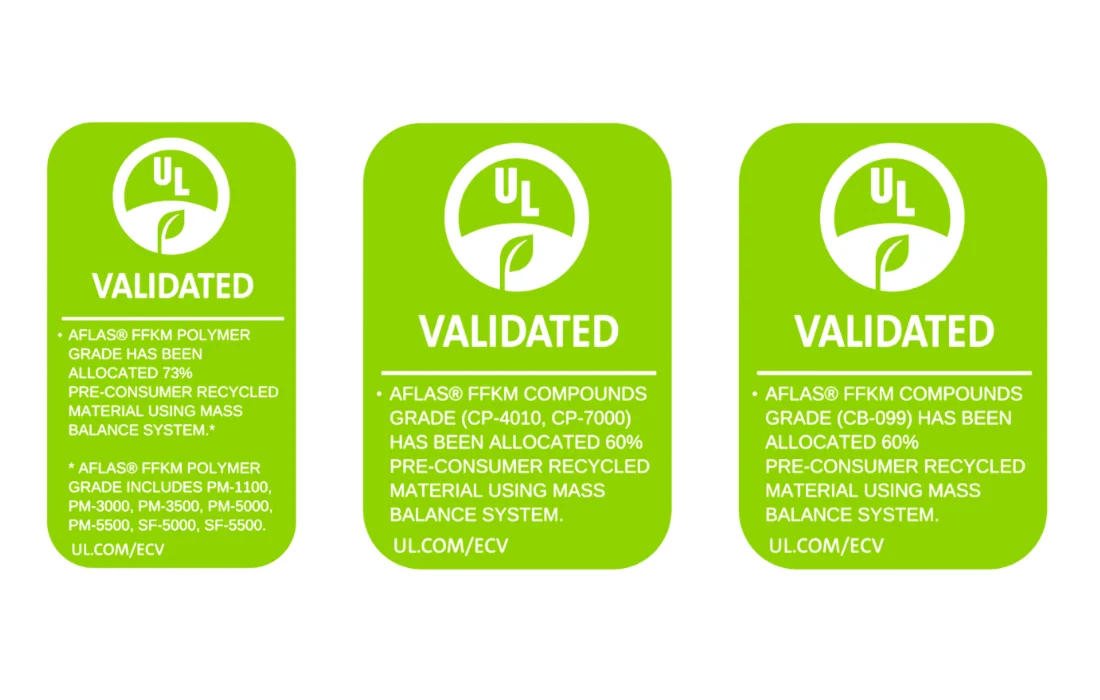
Marks and reference graphics are shown for identification, academic research and commentary. The image does not grant permission to apply a scheme mark to packaging; consult the issuing body's current eligibility and artwork rules.
A claim about material history
A recycled-content claim asserts a fact about the package’s history, not its disposal. “Made with 30% recycled plastic” is, in principle, a checkable statement about material flows: what entered the factory, from where, and in what proportion. That checkability is why a certification industry grew around the claim.
The schemes are not interchangeable, however, and their differences are substantive rather than administrative. They differ on what counts as recycled material, on how recycled input may be allocated to outputs, which is the chain-of-custody question treated at length in the mass balance article, and on what the certified claim licenses on-pack. A "30% recycled" claim certified under one scheme and the same words certified under another may describe materially different physical situations. This article maps the major schemes and the axes on which they diverge.
The definitional baseline
All the schemes examined here build on the vocabulary standardised in ISO 14021, which distinguishes pre-consumer material, diverted from the waste stream during manufacturing and excluding rework reused within the process that generated it, from post-consumer material, recovered after use by end consumers (ISO, 1999). The distinction carries economic and environmental weight, in that post-consumer recovery is the scarcer achievement that recycling policy is designed to drive, whereas pre-consumer streams such as edge trim and converting scrap were not at risk of disposal in the same sense. Schemes and statutes that treat the two categories identically accordingly reward different behaviour from those that privilege post-consumer content, and this is the first axis on which certifications divide.
The schemes
SCS Recycled Content Standard (SCS-103). Operated by SCS Standards & Assurance Systems with audits by SCS Global Services, the scheme certifies percentages of both post-consumer and pre-consumer content and accepts either physical segregation or mass-balance attribution as the chain-of-custody model. Its distinguishing rule operates at the claim interface: the chain-of-custody model used must be disclosed in all claims, including on-product logos (SCS Standards, n.d.). Among the schemes surveyed here, SCS therefore addresses the mass-balance question through disclosure, permitting attribution while requiring that attributed and physical content not share an undifferentiated label.
UL 2809 (Environmental Claim Validation Procedure for Recycled Content). UL Solutions' framework spans four parts, of which 2809-2 covers recycled content proper, comprising post-consumer and pre-consumer or post-industrial material, with companion parts addressing defined-source content, ocean and ocean-bound plastics, and by-product synergy (UL, n.d.). The ocean-plastics part gives UL a distinct role, since "ocean-bound" claims, which concern material collected from at-risk coastal zones rather than from the sea itself, are widely marketed and are not covered by a consensus standard; UL 2809-3 is their principal third-party anchor.
RecyClass Recycled Plastics Traceability Certification. The RecyClass platform, operating under Plastics Recyclers Europe with audits by recognised certification bodies, certifies traceability of recycled plastics through the value chain and the recycled content of final products, with certificates valid for three years (RecyClass, n.d.). Its position is systemic as well as substantive: RecyClass also operates Europe's principal design-for-recycling assessments, and is accordingly the one body among those surveyed here that certifies both directions of the circular claim, namely what a package contains and what it can become.
ISCC PLUS. The International Sustainability and Carbon Certification system, extended from bioenergy into plastics and chemicals, is the scheme predominantly used for chemically recycled feedstocks and stands at the centre of the attribution debate. Its mass-balance framework offers three attribution options of graduated stringency — free attribution, fuel-use-excluded, and proportional — whose differences determine how much recycled character may be concentrated into chosen outputs (ISCC, n.d.). The details of those options, and the controversy surrounding them, are treated in the next article; for present purposes it is sufficient to record that an "ISCC PLUS certified" statement, without more, does not disclose which attribution option underlies the claim.
Global Recycled Standard and Recycled Claim Standard. Textile Exchange's pair, of which GRS requires at least 20 per cent recycled content together with social, environmental and chemical criteria and RCS requires at least 5 per cent with content verification only, originate in textiles but appear on packaging, particularly where brand sustainability programmes span product and pack (Textile Exchange, n.d.). Their physical chain-of-custody orientation and, in the case of GRS, their bundling of content with process criteria place them nearer to a general sustainability certification than to a content audit alone.
The axes of divergence
Reduced to essentials, the schemes divide on four questions.
Qualifying material. All exclude primary production. They differ on the treatment of pre-consumer material, which all admit but with differing prominence rules; on chemically recycled feedstock, which is central to ISCC PLUS and contested elsewhere; and on provenance categories such as ocean-bound, which is UL's specialty. A percentage stated without its scheme is therefore under-specified, since 30 per cent leaves open of what, and counted how.
Linkage of input to output. Physical segregation, controlled blending and mass-balance attribution form a spectrum running from molecular presence to accounting presence. SCS accepts both ends of the spectrum but mandates disclosure; RecyClass's traceability orientation sits toward the physical end; ISCC PLUS institutionalises attribution. This divergence is examined next in this theme.
Scope of the on-pack licence. Schemes differ on logo formats, on whether percentages may be rounded or averaged across product lines, and on whether the chain-of-custody model must be visible to the consumer. Only SCS makes model-disclosure a general on-product rule (SCS Standards, n.d.); elsewhere the label typically communicates the percentage and the scheme, leaving the accounting model in the certificate.
Audit structure and frequency. All use third-party audit, but accreditation structures, surveillance intensity and certificate durations differ: RecyClass operates three-year validity through recognised certification bodies, ISCC an annual audit cycle inherited from its bioenergy origins, and SCS an integrated standard-setter and auditor structure. These differences seldom appear in marketing, although they determine the assurance a given seal embodies.
ISO 14021's recovered-material vocabulary
Beneath each scheme's rulebook lies the definitional settlement of ISO 14021, whose exact terms, publicly accessible through the standard's national adoptions, are set out here because the schemes' divergences begin within them.
The standard defines recycled content by reference to recovered material in two streams. Pre-consumer material is "material diverted from the waste stream during a manufacturing process", subject to the exclusion that "excluded is reutilization of materials such as rework, regrind or scrap generated in a process and capable of being reclaimed within the same process that generated it" (ISO, 1999). Post-consumer material is "material generated by households or by commercial, industrial and institutional facilities in their role as end-users of the product which can no longer be used for its intended purpose", including returns from the distribution chain (ISO, 1999).
Three consequences follow from the drafting. First, the same-process exclusion operates against inflation of content figures: without it, routine factory regrind, being material that was never waste in a policy-relevant sense, would be counted in every content figure, whereas with it, pre-consumer claims require diversion across a process boundary, a line whose application to integrated plants generates technical audit disputes. Second, the end-user framing of post-consumer material settles the distribution-chain question, since unsold returns count, while leaving open the industrial-end-user cases, such as transport packaging discarded by a factory acting as a user, which schemes resolve differently at the margin. Third, the definitions are definitions of material history and are silent as to process: mechanical and chemical recycling both yield "recovered material" if the input qualifies, which is why the attribution controversy examined in the mass balance article arises downstream of the ISO vocabulary rather than within it.
The vocabulary is adopted across the field: the schemes cite it, the FTC's framework parallels it, and statutory regimes adopt its post-consumer term while tightening it, both California's mandate and the EU's Article 7 counting post-consumer material only. ISO 14021's definitions accordingly supply the shared reference point against which each scheme's variations can be read as variations.
Interaction with law
The certification layer increasingly operates as the compliance mechanism for statutory recycled-content mandates, a role that alters the function certification performs.
California's AB 793, the first producer-level recycled-content mandate for plastic beverage containers, with escalating minimums and per-pound penalties on shortfalls, obliges producers to substantiate portfolio-average post-consumer content to a regulator; the EU's single-use-plastics directive had set member-state-level bottle targets the year before, and the mandates article gives the regime in full. The EU's packaging regulation imposes category-specific minimums from 2030 counting only post-consumer material (Regulation (EU) 2025/40). Neither regime mandates any private scheme, but both make auditable content accounting a legal necessity, and the schemes constitute the existing machinery for it. The consequence corresponds to a pattern recorded across the themes examined here: private certifications built for voluntary claims are being used as evidence infrastructures for public law, with their definitional choices, as to what counts and how it is allocated, acquiring a regulatory significance that their drafters did not anticipate.
Claims law completes the perimeter. The FTC's Green Guides treat recycled-content claims as requiring substantiation of the claimed proportion, with the pre- and post-consumer distinction disclosed where relevant; the EU's Empowering Consumers Directive makes unsubstantiatable generic claims per se unfair (Directive (EU) 2024/825). Certification is, under both regimes, the practical route to substantiation, which is why its internal divergences have effects beyond the schemes' membership.
The schemes as differentiated assurance products
The scheme map may also be read as a set of differentiated assurance products, each addressed to a different purchaser of credibility.
SCS is oriented to consumer-facing transparency: its mandatory disclosure of the chain-of-custody model on the claim itself suits cases in which the brand's exposure is to claims-law scrutiny and greenwashing allegation, the certificate being designed to withstand a regulator's reading of the label. UL is oriented to frontier coverage: where a claim involves categories not disciplined by any consensus standard, ocean-bound plastics in particular, UL 2809's part structure supplies third-party anchoring for assertions that would otherwise be unanchored. RecyClass is oriented to system coherence: a European converter whose design-for-recycling grade and content certification issue from the same assessment ecosystem obtains alignment between the two directions of circularity, which becomes material as EU law begins to regulate both. ISCC PLUS is oriented to chemical-recycling access: for feedstocks that only attribution accounting can carry to a percentage claim, it operates less as one option among several than as the condition of the claim's availability. The Textile Exchange pair is oriented to programme breadth: where a brand's sustainability programme spans textiles and packaging, GRS and RCS extend one certification vocabulary across both.
Read in this way, the divergences described in the previous section constitute market segmentation rather than fragmentation awaiting consolidation. The corresponding analytical question is not which scheme is strictest, the schemes being strict about different things, but what a scheme's selection indicates: a producer's choice of certifier is itself information about the risk the claim was constructed to manage, whether regulatory exposure, category novelty, system alignment, or feedstock accounting. The scheme logo, so decoded, discloses the claim's purpose as well as its verification.
Limits of the assertion
The limits of this claim family require statement because the claims are accurate in their own terms while inviting inferences beyond them.
A certified percentage does not, under attribution models, mean that the stated share of this package's molecules is recycled; that is the mass-balance question, which arises wherever the model is undisclosed. It does not mean that the package is recyclable, content and recyclability being independent properties, so that a 100 per cent recycled multilayer pouch may be unrecyclable everywhere. It does not mean post-consumer content unless the claim says so, since "recycled" without qualification may rest substantially on pre-consumer streams. It does not establish environmental superiority in lifecycle terms, which depends on displaced virgin production, reprocessing burdens and transport, none of which certification addresses. Moreover, the scheme logos certify the claim rather than the product's other attributes: a traceability seal is not a safety, quality or sustainability endorsement.
The recycled-content certifications rest on auditable subject matter, professional schemes and enforcement mechanisms, which distinguishes them from claim families whose subject matter cannot be checked from producer records. The constraint on their usefulness is legibility rather than integrity: the decisive variables, namely material scope, custody model and allocation rule, are recorded in scheme documents that consumers do not see, behind labels that compress them into a single percentage. Of those compressed variables, the chain-of-custody model is examined in the mass balance article.
References
Directive (EU) 2024/825 of the European Parliament and of the Council of 28 February 2024, OJ L, 2024/825, 6.3.2024. Available at: Open source (Accessed: 18 August 2026).
ISCC (n.d.) Mass balance and attribution: understanding the difference. Available at: Open source (Accessed: 18 August 2026).
ISO (International Organization for Standardization) (1999) ISO 14021:1999 Environmental labels and declarations — Self-declared environmental claims. Geneva: ISO. Text as adopted in IS/ISO 14021:1999, available at: Open source (Accessed: 18 August 2026).
RecyClass (n.d.) Certifications. Available at: Open source (Accessed: 18 August 2026).
Regulation (EU) 2025/40 of the European Parliament and of the Council of 19 December 2024 on packaging and packaging waste, OJ L, 2025/40, 22.1.2025. Available at: Open source (Accessed: 18 August 2026).
SCS Standards (n.d.) Recycled Content Standard (SCS-103). Available at: Open source (Accessed: 18 August 2026).
Textile Exchange (n.d.) Global Recycled Standard and Recycled Claim Standard. Available at: Open source (Accessed: 18 August 2026).
UL Solutions (n.d.) Environmental Claim Validation (ECV) — UL 2809. Available at: Open source (Accessed: 18 August 2026).
Note on sources and verification
Scheme characterisations rest on the operators' own public documentation as cited. The SCS disclosure rule — that the chain-of-custody model must appear in all claims including on-product logos — is as stated in the SCS-103 standard's public description. UL 2809's four-part structure and the latest published edition consulted date from the scheme's public pages; edition-level changes were not tracked. The GRS/RCS thresholds (20 and 5 per cent) are from Textile Exchange's standard descriptions; the specific Textile Exchange URL cited is the standard's landing page and may redirect as the organisation reorganises its documentation. ISO 14021's pre-/post-consumer definitions are quoted from the 1999 text as publicly accessible through the archived national adoption cited; clause numbers are deliberately not cited, and the quotations require checking against that text before onward citation (see the Mobius loop article's note on edition caveats). FTC treatment of recycled-content claims summarises 16 CFR § 260.13 without quotation; that section was not re-extracted for this article.
Last verified: 18 August 2026.